Loading…
Corneal Condition
Understanding Keratoconus
A progressive condition causing the cornea to thin and bulge into a cone shape, leading to distorted vision that worsens over time.
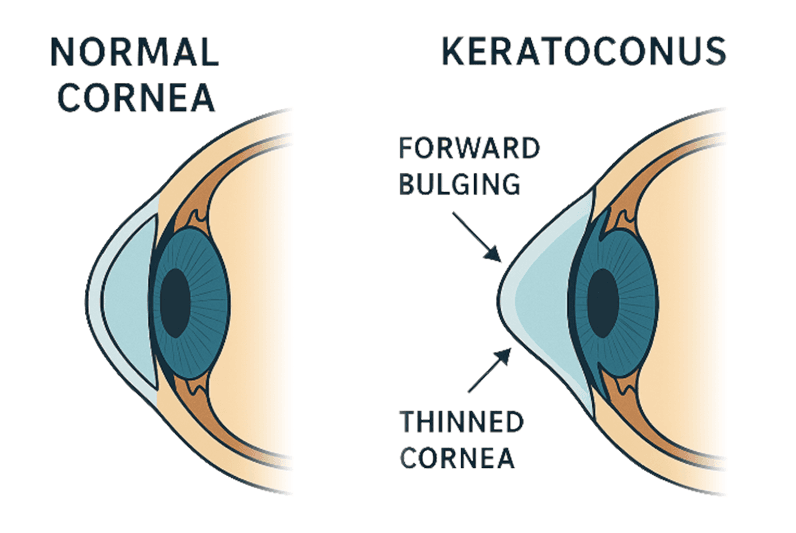
What is Keratoconus?
Keratoconus is a progressive eye condition where the cornea—the clear front surface of the eye—gradually thins and bulges outward into a cone shape.
The normally dome-shaped cornea becomes irregular, causing light to be focused incorrectly and resulting in distorted, blurry vision. Keratoconus typically begins in the teenage years or early twenties and may progress for 10-20 years before stabilising.
The exact cause is unknown, but it appears to involve a combination of genetic predisposition and environmental factors. Eye rubbing has been strongly linked to keratoconus progression.
Symptoms
Blurred or distorted vision
Increased light sensitivity
Glare and halos around lights
Frequent prescription changes
Difficulty driving at night
Eye strain and headaches
Treatment Options
Treatment depends on the severity and progression of keratoconus
Early Stage
Glasses and Contact Lenses
In early stages, glasses or soft contact lenses may correct vision adequately.
Moderate Stage
Rigid Gas Permeable Lenses
As keratoconus progresses, RGP or scleral lenses provide better vision correction.
Progressive Stage
Corneal Cross-Linking
UV light and riboflavin treatment to strengthen the cornea and halt progression.
Advanced Stage
Corneal Transplant
For advanced cases where other treatments are insufficient, transplantation may be needed.
Expert Management
As a corneal specialist, Miss Menassa provides comprehensive assessment and management for keratoconus patients. She can diagnose and monitor the condition, coordinate cross-linking treatment when needed, and perform corneal transplantation for advanced cases.
Concerned About Keratoconus?
Early detection and treatment can help preserve your vision. If you have changing vision or a family history of keratoconus, book a consultation for assessment.